

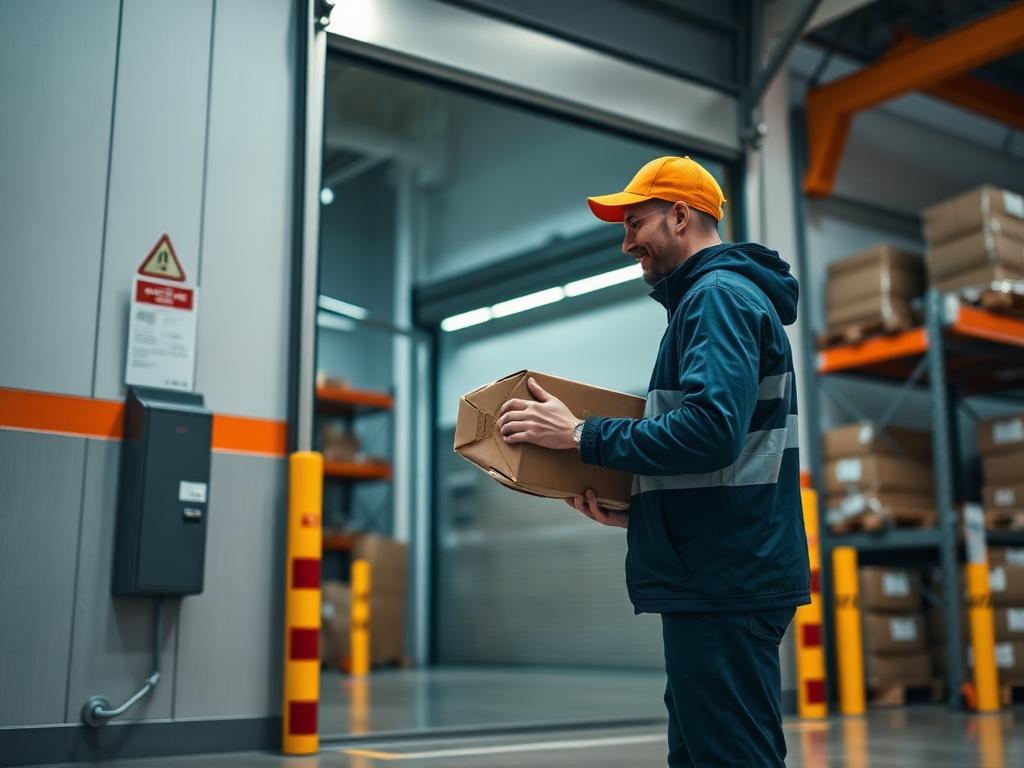
Guide by the logistics team at Vertex Logistics — we work with carriers and freight networks every day, so here’s a clear, no-jargon breakdown of who actually delivers Amazon’s packages.
The short answer
Amazon doesn’t rely on a single courier. It uses a mix of its own in-house delivery network and outside carriers, and the one that brings your package depends on your location, the item, and how fast it’s being shipped. In practice, Amazon delivers packages through:
- Amazon Logistics (AMZL) — Amazon’s own delivery arm (its biggest channel today)
- USPS — the U.S. Postal Service, especially for lighter items and last-mile delivery
- UPS — for a portion of parcels
- FedEx — limited use for Amazon’s own orders, more common for third-party sellers
- Regional couriers — local carriers like OnTrac in parts of the U.S.
- DHL — mainly for international shipments
Today, Amazon delivers the majority of its own U.S. packages through Amazon Logistics rather than traditional carriers — a major shift from a decade ago when it depended almost entirely on USPS, UPS, and FedEx.
Amazon Logistics (AMZL): Amazon’s own delivery network
Over the last several years Amazon built its own last-mile delivery operation, now branded Amazon Logistics. If your tracking says “Amazon” or the package arrives in a blue-and-black Amazon van (or an unmarked car), it came through AMZL. It’s made up of three parts:
- Delivery Service Partners (DSPs): Independent local companies contracted by Amazon that operate branded Amazon vans and employ the drivers you see in your neighborhood.
- Amazon Flex: Independent contractors who deliver packages using their own vehicles — similar to a rideshare model, but for parcels.
- Amazon’s local delivery network: The system of local delivery stations that receive packages, sort them by route, and hand them to DSP and Flex drivers for the final mile to your door.
This is what people mean by Amazon’s “local delivery network” — the regional stations and last-mile drivers that let Amazon deliver its own packages, often seven days a week including Sundays.
The third-party carriers Amazon still uses
Amazon hasn’t replaced outside couriers entirely — it still hands large volumes to established carriers, especially in areas its own network doesn’t fully cover.
| Carrier | How Amazon uses it |
|---|---|
| USPS | Heavily used for lightweight parcels, PO Box delivery, rural addresses, and Sunday delivery. |
| UPS | Carries a share of Amazon parcels, particularly heavier or expedited items. |
| FedEx | Amazon largely stopped using FedEx for its own orders in 2019, but FedEx still moves some volume and is widely used by third-party sellers. |
| Regional couriers (e.g., OnTrac) | Local carriers handle deliveries in specific regions where they’re faster or cheaper than national carriers. |
Does Amazon use DHL?
Internationally, yes. DHL is one of Amazon’s key partners for cross-border and international deliveries, and DHL eCommerce handles some parcels in certain markets. Within the United States, Amazon rarely uses DHL for standard domestic delivery — that’s dominated by Amazon Logistics, USPS, and UPS.
Who actually delivers Amazon packages?
Put simply: whoever can deliver your package fastest and most cheaply for your specific address and speed of shipping. Amazon’s system automatically chooses a carrier based on:
- Your location — Amazon’s own network covers most cities; rural and remote areas lean more on USPS.
- Delivery speed — Same-day and next-day orders usually go through Amazon Logistics; standard orders may use USPS or UPS.
- Package size and weight — Small, light items often go to USPS; larger items to UPS or Amazon’s own vans.
- Carrier capacity — During peak seasons, Amazon spreads volume across more carriers to avoid delays.
This is why two orders shipped to the same house on the same day can arrive via two different couriers.
Amazon’s delivery methods explained
“What courier does Amazon use” and “what delivery method does Amazon use” often mean the same question. Here are the main delivery methods behind those carriers:
- Standard delivery — routed to whichever carrier is most efficient (Amazon Logistics, USPS, or UPS).
- Prime one-day / same-day — almost always Amazon Logistics, using local delivery stations.
- Amazon Day / scheduled delivery — consolidated deliveries on a chosen day, typically via AMZL.
- Amazon Fresh & Whole Foods — Amazon’s own grocery delivery fleet.
- Amazon Hub / Locker — delivery to a secure pickup locker instead of your door.
- International delivery — DHL and local in-country carriers via Amazon Global.
What Amazon’s carrier strategy teaches every business
Amazon’s model is a case study in owning and diversifying your last mile: by building Amazon Logistics while keeping USPS, UPS, and regional couriers in the mix, Amazon reduced its dependence on any single carrier, controlled delivery speed, and cut costs at scale. The lesson for any company moving goods is the value of flexible, multi-carrier logistics — using the right carrier for each lane instead of locking into one.
How Vertex Logistics applies the same thinking
That multi-carrier, right-route-for-every-shipment approach is exactly how Vertex Logistics moves freight for our clients. Instead of forcing every shipment through one lane, we match each one to the most reliable and cost-effective route and carrier — air, sea, or land — so you get Amazon-style efficiency without building your own delivery empire. Whether you’re importing, exporting, or shipping across borders, we handle the carrier complexity so you don’t have to.
Need shipping handled the smart way? Talk to the Vertex Logistics team about your freight and we’ll route it the most efficient way — the same principle that powers Amazon’s delivery network, applied to your cargo.
Frequently asked questions
Who delivers Amazon packages?
A mix of Amazon’s own drivers (Amazon Logistics — including Delivery Service Partners and Amazon Flex) and outside carriers like USPS, UPS, and regional couriers. Amazon now delivers most of its own U.S. packages in-house.
What carriers does Amazon use?
Amazon Logistics (its own network), USPS, UPS, FedEx (limited, mostly for third-party sellers), regional couriers such as OnTrac, and DHL for international shipments.
What shipping service does Amazon use for Prime orders?
Prime one-day and same-day orders are usually delivered by Amazon Logistics through local delivery stations, which is how Amazon hits fast delivery windows.
Does Amazon use third-party delivery?
Yes. Alongside its own network, Amazon uses third-party carriers (USPS, UPS, FedEx, regional couriers) and independent Delivery Service Partners who operate Amazon-branded vans.
Does Amazon use DHL?
Mainly for international and cross-border deliveries. DHL is rarely used for standard domestic U.S. delivery.
What is Amazon’s local delivery network?
The network of local delivery stations and last-mile drivers (DSPs and Flex) that sort and deliver Amazon’s own packages the final distance to customers.
The bottom line
There’s no single “Amazon courier.” Amazon runs a smart, flexible mix — its own Amazon Logistics network backed by USPS, UPS, regional couriers, and DHL for international — and picks the best one for each package automatically. That multi-carrier strategy is the real reason Amazon delivers so fast, so cheaply, at such scale.
If your business wants that same efficiency without the overhead, that’s what Vertex Logistics does every day. Get in touch with Vertex Logistics and let us route your freight the smartest, most cost-effective way.